






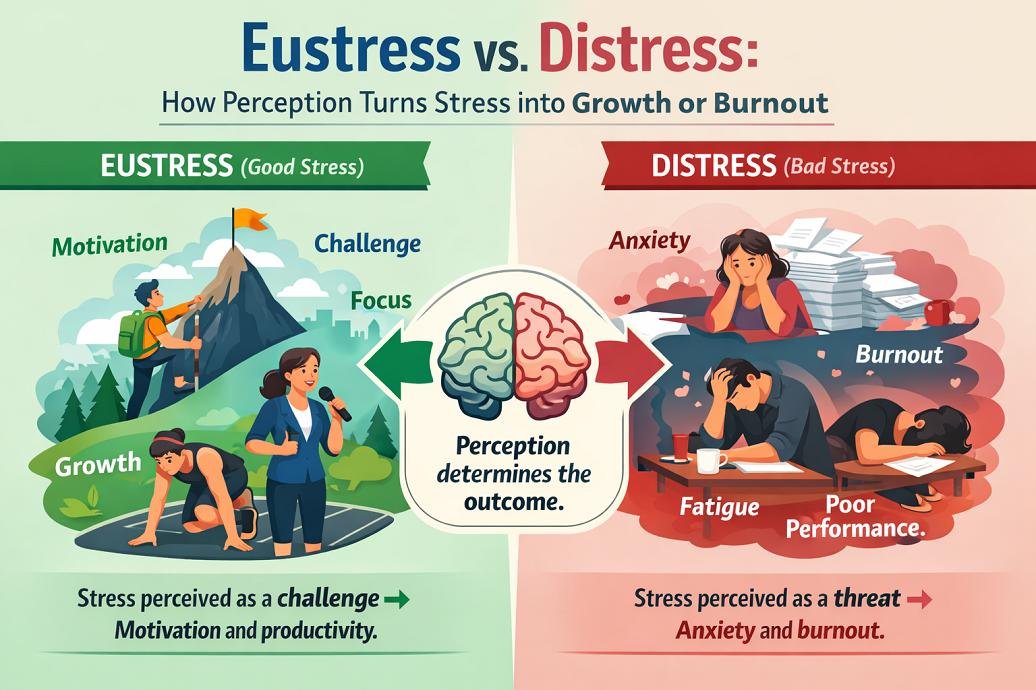
When life throws something new your way, the body and brain react – that’s stress. Though many assume it only causes harm, some people gain strength or clarity from it, shaped by their mindset and coping habits. Experts usually split stress into two forms: one kind energizes, the other overwhelms. That spark which pushes someone forward, fuels effort, even sparks change – this is called eustress. On the flip side, distress shows up as a harmful kind of pressure – tightness, worry, trouble sleeping – especially when too much piles on at once. Spotting how eustress differs from distress helps people handle tension better, keeping mind and body in working order.
Meaning of Stress
Not every demand feels heavy, yet each one nudges the system into motion. Facing pressure shifts something inside – hormones like adrenaline rise without warning. Action looms close, sparked by ancient wiring beneath calm surfaces. Life throws curveballs – work overload, tests, money troubles, love life snags, or happy things such as weddings or job jumps – each capable of sparking tension.
Specialists divide stress into mainly two types:
- Eustress (Positive Stress)
- Distress (Negative Stress)
1. What Is Eustress?
That spark you feel when a challenge lights a fire inside – eustress shapes it into motion. Pushed forward by pressure that doesn’t crush, people rise with sharper attention. Energy flows differently here, not frantic but directed, like wind behind steady sails. Growth sneaks in through effort that excites instead of drains. Achievement isn’t chased – it follows naturally.
Good stress has a name. It stems from an old word root tied to wellness. That prefix, “eu,” shows up here paired differently than usual. Instead of struggle, it joins something more familiar: stress. The mix forms a concept where pressure feels useful. Not all tension weighs you down. Sometimes it lifts. This version arrives with purpose.
Characteristics of Eustress
Eustress has several distinctive features:
1. Here’s a spark that pushes someone to try harder, reach further. Getting ahead feels possible when energy comes from within. A push forward often starts with wanting more than before. Reaching targets becomes easier once the drive kicks in. Effort grows when purpose shows up.
2. A few days here, a sudden shift there – often tied to something happening right now. Temporary by nature, these changes come and go like weather patterns passing overhead.
3. When it seems within reach, a person believes they can deal with what’s in front of them.
4. Working better happens when focus gets sharper. Productivity climbs because attention stays on track.
5. A spark lights up instead of a knot forming inside. This feeling leans toward joy, not worry.
Good pressure? That’s eustress – spurring people forward without breaking them. It shows up when challenges feel just right, nudging improvement instead of overwhelm. Not all strain weighs you down; some lifts effort naturally. Growth often follows this spark, quiet but steady.
Examples of Eustress
- A person might feel energized when facing a tough but exciting situation. Sometimes pressure comes with opportunity. Facing change can spark a sense of strength. A demanding moment may still bring motivation. Challenges, if manageable, tend to lift mood instead of weighing it down.
- A strange spark rises when stress appears, not crushing but coaxing movement. The weight doesn’t drag – it leans in, urging steps ahead.
Benefits of Eustress
Fueled by challenge, eustress shapes growth while quietly supporting mental balance. Though often overlooked, it pushes without breaking, helping people adapt through manageable pressure.
1. Improves Motivation
A little pressure can push someone to try harder, sticking close to what they aim to achieve. Take a student getting ready for a test – focus sharpens when tension sits just right.
2. Encourages Personal Growth
Working through small problems helps folks pick up abilities, grow tougher when things get hard, and sometimes even feel sure about themselves. Challenges that aren’t too big give room to try, fail, keep going – each step adds strength without crushing spirit.
3. Increases Productivity
Productivity often rises when pressure feels good instead of heavy. A light kind of tension pushes people to move faster through work. Efficiency grows not from calm but from a spark in the air. Some thrive once they feel just enough pull on their time.
4. Promotes Positive Feelings
Excitement shows up more when stress feels good, satisfaction tags along, and achievement sticks around, too.
2. What Is Distress?
Heavy moments creep in quiet ways – through tight shoulders, restless thoughts, maybe stomach knots. When coping runs thin, strain settles deeper. Feeling swamped often leads straight into this state.
When pressure builds up too much, or just goes on and on without letup, that is when trouble usually shows up. Sometimes it sneaks in after weeks of tension piling higher than expected. Relief missing for days can shift everything sideways. A steady push with no break tends to wear down even small resilience. Long stretches under strain change how things feel inside.
Characteristics of Distress
Distress has several defining characteristics:
1. Produces anxiety and worry
2. Reduces performance
3. Feels overwhelming
4. Lasting just a while or stretching out over time
5. Leads to emotional and physical problems
Too much pressure can overwhelm someone’s capacity to handle things. That shift leads straight into turmoil.
Types of Distress
How long it lasts shapes how we label distress – some stretches out, others pass quickly.
1. Acute Distress
A sudden wave of intense discomfort marks the start. This kind of struggle shows up fast, yet doesn’t stay long. Often tied to moments like accidents or shocks. Pressure builds quickly when something jolts the usual rhythm. Events such as injuries or surprises can trigger it. The body reacts sharply, then settles once the moment passes
- Missing a deadline
- Something went wrong when nobody saw it coming
- Having an argument
Even if it does not last long, sharp emotional pain might cloud thinking. A sudden wave of inner turmoil could slow reactions.
2. Chronic Distress
Persisting stress sticks around, wearing down both mind and body over time. Brought on by lasting difficulties like:
- Financial difficulties
- Long-term workplace pressure
- Family conflicts
- Unemployment
Prolonged stress turns risky when the body stays on high alert too long. Health slowly breaks down as tension lingers without relief.
Causes of Distress
Heavy workloads often spark tension. Pressure builds when deadlines pile up. Trouble at home might stir unrest, too. Money worries tend to weigh on people. Health issues sometimes fuel unease. Sudden changes usually unsettle routines. Arguments frequently disturb peace. Lack of sleep commonly deepens strain
1. Work Pressure
Pressure grows quickly if tasks stack high, minutes slip away, or what comes next seems unsteady.
2. Relationship Issues
Fights among relatives, pals, or lovers usually bring on inner pain. Sometimes tension builds when words clash, feelings shift sideways, and connections strain without warning. Emotions dip low after sharp exchanges at home, across town, inside quiet rooms where voices rise too fast.
3. Academic Pressure
Facing tests, pressure, and high hopes often weigh on learners. Still, rivalry adds another layer few see coming.
4. Major Life Changes
A sudden shift like moving homes might spark deep unease. Hard times often follow when someone close passes away. Splitting from a partner can bring heavy feelings. Getting sick may lead to emotional strain. Each change hits differently, yet all weigh heavily.
Effects of Distress
1. Psychological Effects
Distress often leads to emotional problems such as:
- Anxiety
- Depression
- Irritability
- Challenge focusing
- Reduction of motivation
2. Physical Effects
Falling into long-term tension might wear down physical health while setting off issues like:
- Headaches
- High blood pressure
- Heart disease
- Digestive problems
- Sleep disorders
3. Behavioral Effects
People undergoing distress might also acquire harmful routines, Such as:
- Some people eat too much
- Substance abuse
- Social withdrawal
- Reduced productivity
The Link Between Stress and How Well You Do
Some researchers point to a curve showing how people do better under mild pressure – yet start struggling once tension crosses a threshold. That idea comes up a lot when experts talk about stress and results.
- Low stress → boredom and low motivation
- Moderate stress (eustress) → optimal performance
- High stress (distress) → anxiety and poor performance
Success tends to follow not from zero strain but from a steady push without a breaking point.
Turning Hardship Into Helpful Stress
Even when pain feels heavy, a person might shift it toward something useful by handling pressure in smart ways.
1. Changing Perspective
When you see tough moments as chances instead of dangers, stress changes shape. It stops feeling heavy. Energy moves differently through the body than.
2. Setting Realistic Goals
Tackling small parts first makes progress clearer. Each move forward counts more than rushing through. Pressure fades when focus narrows. Starting tiny shifts how hard something seems.
Stress Management Techniques
1. Physical Activity
Beyond moving your body, tension chemicals dip during workouts.
2. Social Support
Words shared with loved ones ease the weight inside. A chat with someone trusted can soften hard feelings. Connections built through honest talk bring quiet comfort.
3. Healthy Lifestyle
Good food choices shift how energy flows through the system. Water intake shapes resilience in quiet ways.
4. Mindfulness
Thoughts and feelings? Noticing them changes how you react under pressure.
Understanding Good Stress Matters
Besides helping you respond better to pressure, telling eustress apart from distress shapes how you handle challenges. A clear view of these two types changes your reactions before stress builds up too much.
1. Improved Productivity
Pressure that feels motivating might sharpen focus. When energy rises just enough, performance often follows. A push from mild tension could unlock results not seen at rest.
2. Personal Development
Learning thrives when stress sparks curiosity instead of fear. Creativity stretches under gentle pressure. Growth shows up where challenge meets effort.
3. Prevention of Burnout
Noticing discomfort early helps folks respond before tension causes damage.
Conclusion
Even when life brings pressure, the real point lies in a person’s response. Eustress – good kind of tension – moves you ahead, clears your mind, since it wakes up drive and growth. Negative stress – distress – drains effort instead, brings worry, weakens output, especially if constant or intense. Recognizing which form shows up shapes better responses to tough moments. With steady awareness plus practical habits, tension shifts direction, turns useful, fuels steadier days, and clearer goals.
Faqs
1. What if pressure helped instead of harming?
A: Sometimes stress does more good than harm – if it stays mild and brief. That kind is called eustress, which sharpens attention while boosting drive to get things done. It nudges performance up without tipping into overload. Goals start feeling reachable once the mind clicks into gear. Not every pressure moment breaks you – some quietly build momentum instead.
2. How does pressure link to how well someone does a task?
A: A little pressure helps people do better, yet too much of it tends to mess things up. When demands rise just enough, focus sharpens – go beyond that point, however, and attention scatters quickly.
3. What are the physical symptoms of distress?
A: Falling apart inside can show up in the body like this:
- Headaches
- Fatigue
- High blood pressure
- Digestive problems
4. What makes grasping positive pressure so key?
A: Understanding good stress helps individuals:
- Improve productivity
- Maintain better mental health
- Manage challenges effectively
- Avoid burnout and chronic stress
Pressure can be useful when people learn to see it differently. Some tension sharpens focus instead of weakening effort. Growth often follows moments that challenge comfort.
5. What if stress could help instead of hurt?
A: Spotting when pressure lifts you versus drags you down makes all the difference. One kind pushes forward, while the other wears away. With awareness, tension turns into traction. It’s not about avoiding strain but directing it. Slight shifts in response change outcomes entirely.
You Might Also Like