





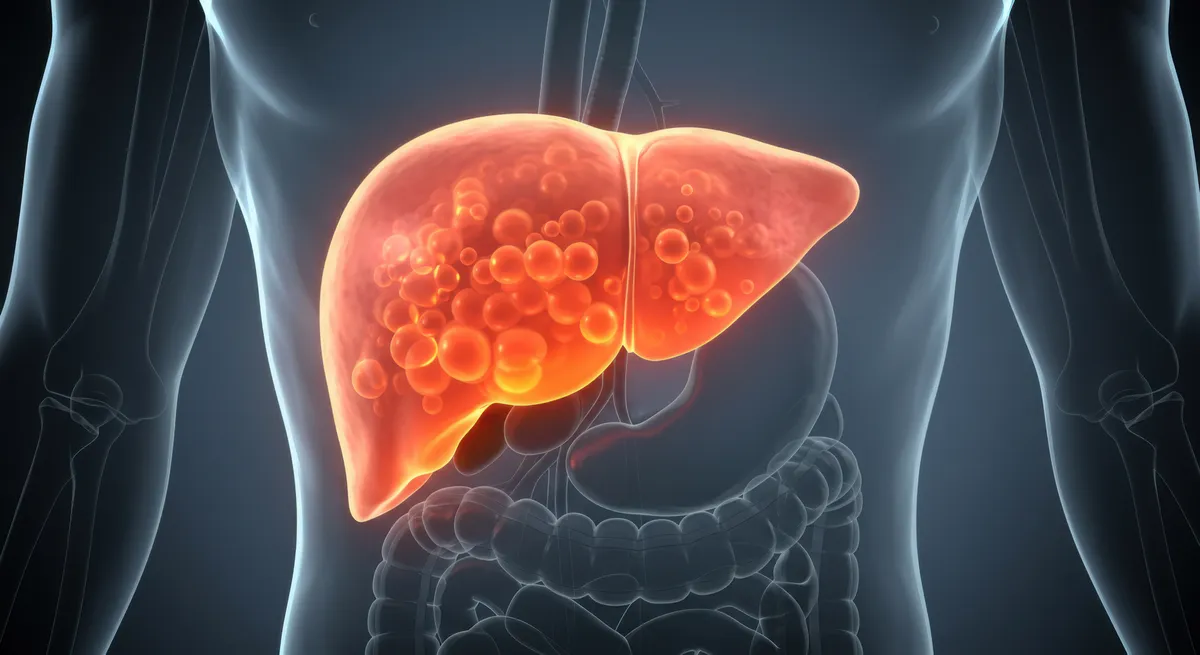
There is a medical term for when there is an abnormal amount of fat in the liver, and the fat is actually invading the cells. This condition is called hepatic steatosis. It is most commonly linked to obesity, diabetes, and metabolic syndrome, but there’s another, rare form that causes it too. This occurrence is linked to a too-rapid loss of weight. The phenomenon is sometimes misnamed “rapid weight loss–induced fatty liver,” and it is a paradoxical link between the processes of fatty acid oxidation and the development of fatty liver. Understanding this link requires an examination of the processes of fat metabolism in the body, as do the broader implications of both rapid weight loss or bariatric surgery-induced fatty liver, and extremely slow weight loss in general.
Physiology of Fatty Liver Disease
Before moving on to the mechanisms of rapid weight loss–induced fatty liver, a brief overview of the general physiology of fatty liver is in order.
In a normal liver, traces of fat are present and are critical to the functioning of cells. But when fat constitutes over 5–10% of the weight of the liver, then the liver is said to be “fatty.”
This might happen in two significant scenarios:
- Alcoholic Fatty Liver Disease (AFLD)
- Non-Alcoholic Fatty Liver Disease (NAFLD)
What Is Weight Loss?
In general, weight loss refers to a reduction of more than 1.5 kg (3 lbs) per week or greater than 1-2% per week. In addition, it might be deliberate or inadvertent and might occur for various causes. Some of the most prevalent triggers of the condition are:
- extreme low-calorie diets or fasting
- bariatric surgical procedures such as gastric bypass or sleeve gastrectomy
- Severe disease or malnourishment
- Excess physical activity in conjunction with calorie restriction
Mechanism of Development or Aggravation of Fatty Liver by Rapid Weight Loss
1. Augmented Fat Mobilization from Adipose Tissue
The FFAs are transported to the liver for metabolism. But when the input is more than what the liver can oxidize or export as lipoproteins (like VLDL), excess fat starts collecting within the liver cells.
2. Disturbed Fat Oxidation
Hepatic steatosis describes the abnormal retention of fat in liver cells. This phenomenon is sometimes referred to as “rapid weight loss–induced fatty liver,” and represents a paradoxical link between the mechanisms of fatty acid oxidation and the development of fatty liver. Understanding this link requires an examination of the processes of fat metabolism in the body, as do the broader implications of both rapid weight loss or bariatric surgery-induced fatty liver, and extremely slow weight loss in general.
Clinical Settings Where Rapid Weight Loss–Induced Fatty Liver Occurs
1. Bariatric Surgery
A few reports have been seen where patients following post-bariatric surgery develop transient worsening of fatty liver or acute liver failure. Risk is especially high with malabsorptive operations (such as jejunoileal bypass), but to a lesser extent with newer methods such as sleeve gastrectomy. The reasons are severe calorie reduction, nutrient deficiencies, and excessive mobilization of fat. But with the passage of time, when weight comes into balance, liver function usually corrects itself to a great extent.
2. Starvation or Protein-Energy Malnutrition
In severe anorexia nervosa or starvation, the liver accumulates fat as a result of impaired protein synthesis and reduced VLDL production and secretion. The liver appears pale and greasy on sectioning – a finding typical of steatosis.
3. Total parenteral nutrition
Fatty liver can also develop as a consequence of TPN. Patients who are receiving intravenous nutrition with poor fat oxidation or with excessive carbohydrate intake and who are returning to normal feeding after TPN may experience rapid weight gain.
Symptoms and Diagnosis
Fatty liver from crash dieting is frequently asymptomatic in its initial presentation. If symptoms do develop, they can be:
- Weakening and fatigue
- Right upper quadrant fullness or discomfort
- Severe jaundice in the most extreme cases
- Nausea or loss of appetite
The diagnosis is made based on laboratory tests, imaging procedures, and a detailed description of the patient’s history.
- Liver function tests (LFT)
- Ultrasound or MR
- Liver biopsy
Potential Complications
Although fatty liver due to sudden weight loss is usually reversible, severe or prolonged instances may result in:
Steatohepatitis (NASH) – inflammation and liver cell damage.
- Fibrosis and Cirrhosis – scarring and permanent liver damage in exceptional, extreme cases.
- Liver Failure – documented after extremely aggressive weight loss surgery or starvation.
- Gallstones – secondary to the changed composition of the bile and impaired gallbladder motility with accelerated weight loss.
Prevention and Management
The good news is that fatty liver induced by accelerated weight loss is generally preventable and, with proper management, reversible. The emphasis needs to be on gradual, nutritionally sound weight reduction.
1. Gradual weight loss
Doctors recommend that weight loss should be about 0.5–1 kg per week. This allows for a caloric deficit of 500–1000 kcal per day. Thus, the liver will be able to break down the fat without overloading.
2. Proteins
They help to restore the liver and maintain the amount of VLDL. You need at least 1,0–1,5 g of protein per 1 kg of body weight. They should be included in the daily diet during weight loss.
3. Vitamins and trace elements
An inadequate amount of vitamins and trace elements disrupts the process of breaking down lipids and the work of the liver.
4. Sports
Sports help to improve the function of the pancreas and burn lipids. Even a walk can be beneficial for patients with hepatic steatosis.
5. No alcohol and drugs
A large weight loss is dangerous for the liver, so it is essential to reduce the load on the organ. You should give up alcohol and not abuse medications to reduce the risk of liver disease.
Recovery and Prognosis
If recognized early and treated properly, fatty liver as a result of rapid weight loss has an excellent prognosis.
Conclusion
Sudden weight loss, as much as it is sought after for its perceived health gains, can ironically overwork the liver and result in fatty liver disease. The condition itself results from an imbalance between fat mobilization rate and the capacity of the liver to handle and export fat. While normally temporary and reversible, it emphasizes the need for gradual, appropriately balanced, and nutritionally sufficient weight loss.
Sustainable weight loss — a combination of moderate caloric restriction, sufficient protein, exercise, and routine medical supervision — not only guarantees healthy fat loss but also safeguards liver function. The liver is a hardy organ that can heal very effectively when allowed time and correct assistance.
FAQS
1. Can rapid weight loss lead to fatty liver?
A: Yes — losing weight too fast can dump fat from body stores into the liver, causing fatty liver.
2. Is rapid weight loss-related fatty liver permanent?
A: Not usually. It tends to get better once weight loss eases up and nutrition becomes more balanced.
3. Can a person experience fatty liver due to rapid weight loss?
A: Hepatic steatosis can develop as a result of rapid weight loss. It is typically a temporary condition that resolves on its own within a short period.