






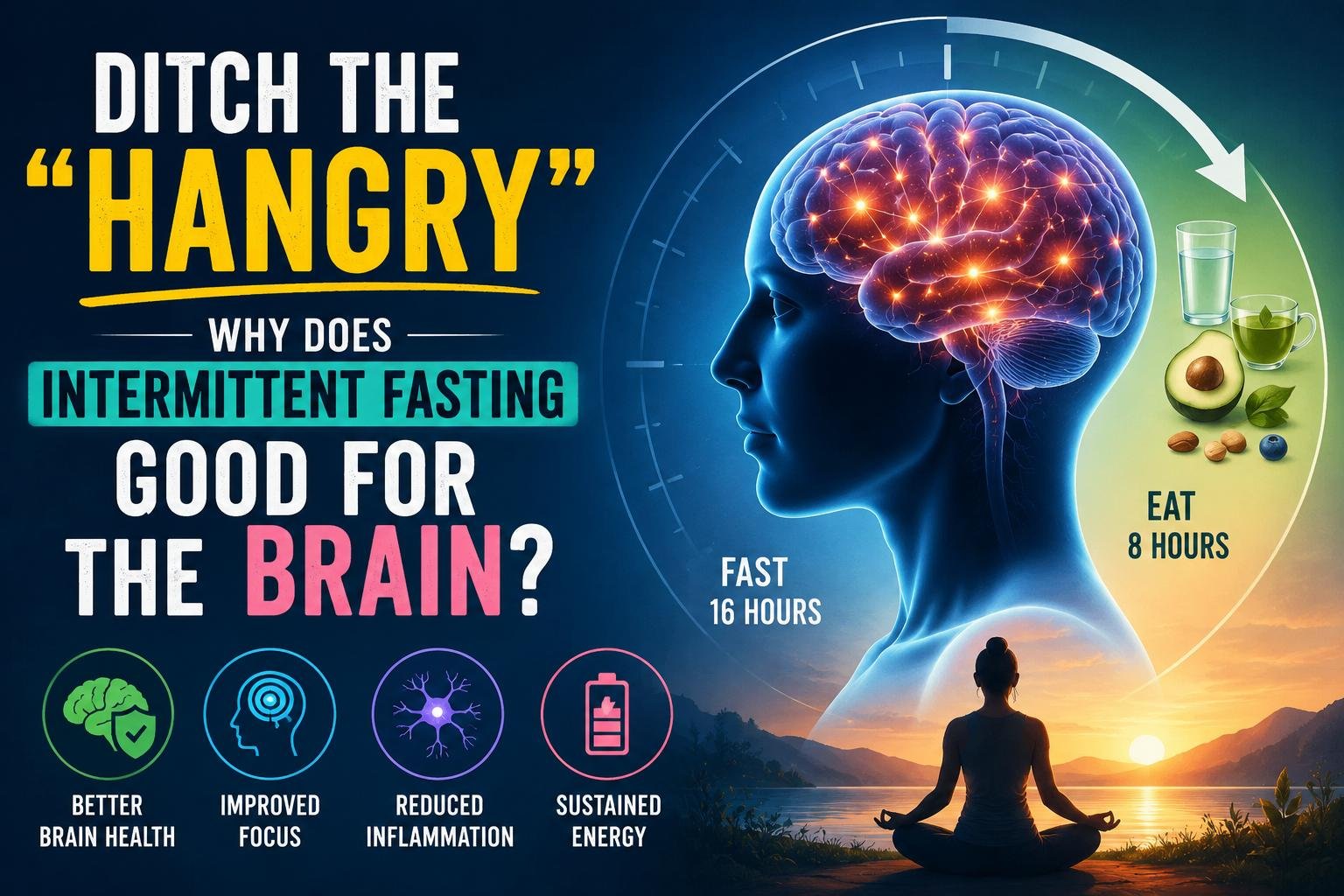
For a long time people have thought that starving the brain produces anxiety, anger, and inability to think clearly. Almost everyone has been in a “”hangry”” state: when you were hungry and then angry. People thought that in order for your brain to function correctly it needs to be fed constantly. Recent studies have shown that intermittent fasting, which is depriving yourself of food on purpose, can “”work out”” your brain and boost your brain’s power.
Intermittent fasting is a type of restrictive eating where a person allows themselves to eat only for specific amounts of time. There are a couple of types of intermittent fasting. The first is the 16:8 diet, which involves eating and fasting every day for sixteen and eight hours, respectively. The second is the 5:2 diet that allows one to skip two meals a week and reduce calorie intake by half in two days.
A possible explanation for why intermittent fasting may help improve your brain function is that it increases levels of a brain protein called brain-derived neurotrophic factor, or BDNF – often referred to as fertilizer for the brain. BDNF is very important for brain function and memory. Scientists have discovered that fasting increases the amount of BDNF, which then “”fertilizes”” the brain and promotes better thinking and better connection between neurons. An increase in brain-derived neurotrophic factors may also explain why many fasting dieters report that their concentration, focus, and brain power feel sharper after a few hours of fasting.
The second reason why intermittent fasting could be beneficial for your brain is that it makes you less sensitive to decreases in glucose in your brain. In other words, you will not feel as “”hungry”” for your brain to eat as often. A person who fasts deprives his brain of glucose, the main source of energy for the brain, and makes it use your fats instead. Breaking down fats produces molecules called ketones, which are another source of energy for the brain. Scientists note that ketones are extremely important for the brain, as they keep it healthy and prevent it from getting “”tired””. Low levels of glucose in the brain usually cause the decreases in alertness that happen when you haven’t eaten for a while.
Intermittent Fasting and the Brain’s Inflammation Response
Inflammation has been identified as a vital trigger for brain aging and various neurodegenerative conditions. The chronic release of inflammatory molecules has been linked to increased rates of cognitive decline among adults and the development of severe conditions such as dementia and memory loss. However, intermittent fasting has been shown to reduce the impact of inflammation on the brain while counteracting oxidative stress that causes damage to brain tissues.
Interestingly enough, intermittent fasting has a positive effect on the mood of people who decide to alternate between fasting and feeding days. They have found that intermittent fasting can enhance learning capabilities and memory, and can aid in the formation of new brain cells. Researchers believe this can reduce an individual’s risk for Alzheimer’s, Parkinson’s, stroke, and other ailments. Scientists believe fasting may reduce the risk of these diseases by reducing inflammation and by increasing production of natural energy-boosting molecules in the brain and through building brain resilience. Therefore, while more research needs to be done, we can conclude that fasting can help your brain stay healthy as long as possible.
Conclusion
The idea of intermittent fasting is much better than it seems. Scientists have found that intermittent fasting can boost BDNF, fuels your brain with ketones, kicks your cells into a cleaning mode, reduces brain inflammation, makes your brain more resistant to stress, and increases focus and improves mood. Intermittent fasting may have different effects on different people, but I am here to tell you it can sharpen your mind. With the right diet, intermittent fasting can give you a healthier brain than you have now.
FAQs
1. What effect does intermittent fasting have on the brain?
A: Intermittent fasting may be the stimulator of the BDNF protein production in the brain. The mechanism of that is that rather than receiving calories, the brain is supplied with ketones deriving from fat and it has an anti-inflammatory effect.
2. Can a person following the intermittent fasting regimen feel more hungry and irritated?
A: There is no doubt that a person who uses intermittent fasting will feel hungry and be irritated, yet it has to be said that these people continue to perform their job better and in fact, eat not too much.
3. Can it be said that there is scientific proof of the fact that intermittent fasting enhances brain activity?
A: Intermittent fasting is confirmed to have a positive influence on the functioning of the brain since the process of ketones production as a source of energy for neurons starts.
4. How soon can one see the effects of intermittent fasting on the brain?
A: Intermittent fasting starts having some effect on the brain after a couple of days of its use but it might require some weeks or even months to witness the full range of effects.