




You have probably seen the claim: take a spoonful of plain gelatin before eating, wait 15 to 30 minutes, and you may feel full enough to eat less. On social media, the idea has acquired several names, including the “gelatin trick,” “pink gelatin hack,” and “bariatric Jello routine.”
It sounds almost too simple. That is partly why it has travelled so quickly.
The routine usually involves mixing unflavored gelatin with warm water or another low-calorie liquid, sometimes letting it set into a small portion before eating it ahead of a meal. The proposed goal is straightforward: create some fullness before the main meal arrives.
But does the biology actually support that idea?
What the Pre-Meal Gelatin Routine Is Supposed to Do
The basic theory has two parts.
First, gelatin forms a thicker mixture when hydrated. Research on gelatinized foods suggests that increased viscosity can slow gastric emptying compared with a liquid meal. In one human study, gelatinized meals took longer to leave the stomach than a comparable liquid meal.
Second, protein can influence appetite-related signaling. That does not mean gelatin behaves like a prescription appetite medication, however. Human research specifically examining gelatin has produced mixed results, and that distinction matters.
A randomized trial comparing gelatin with another protein source found that gelatin did not produce stronger suppression of hunger than alpha-lactalbumin. GLP-1 and ghrelin responses were also similar between the diets. PubMed: Acute effects of breakfasts containing gelatin
So the more defensible explanation is fairly modest: gelatin may contribute to fullness through its physical properties and protein content, but the evidence does not establish a special hormone-triggering effect unique to glycine or proline.
Why the “Bariatric Jello” Name Can Be Misleading
The bariatric connection is real, but social media often stretches it.
People recovering from bariatric surgery commonly move through liquid, pureed, soft-food, and regular-food stages under the direction of their surgical team. Gelatin can appear in some postoperative diet plans because it is easy to swallow and can fit certain stages of a restricted diet.
That does not mean bariatric surgeons recommend eating gelatin before every meal for weight loss.
The American Society for Metabolic and Bariatric Surgery emphasizes hydration and adequate protein after surgery, with individual dietary progression determined by the patient’s bariatric team.
That distinction is important. A food used during recovery is not automatically a clinically proven appetite-control protocol for the general population.
Could Gelatin Actually Make You Eat Less?
Possibly, but the effect should not be oversold.
A small human study comparing different protein sources found no meaningful difference in satiety or 24-hour food intake when gelatin replaced other proteins. Another study found that solid gelatin produced greater subjective satiety than liquid gelatin, yet neither form significantly reduced food intake compared with control.
That gives us a useful clue.
The texture and volume of gelatin may influence how satisfying it feels, but feeling fuller for a short period is not the same thing as producing sustained weight loss.
This is where the viral gelatin trick for weight loss narrative gets ahead of the science.
If a small serving helps someone comfortably reduce the size of a calorie-dense meal, the routine could indirectly support calorie control. If someone simply adds gelatin on top of their normal food intake, there may be little reason to expect a weight-loss effect.
How to Prepare a Pre-Meal Gelatin Serving Without Making It Complicated
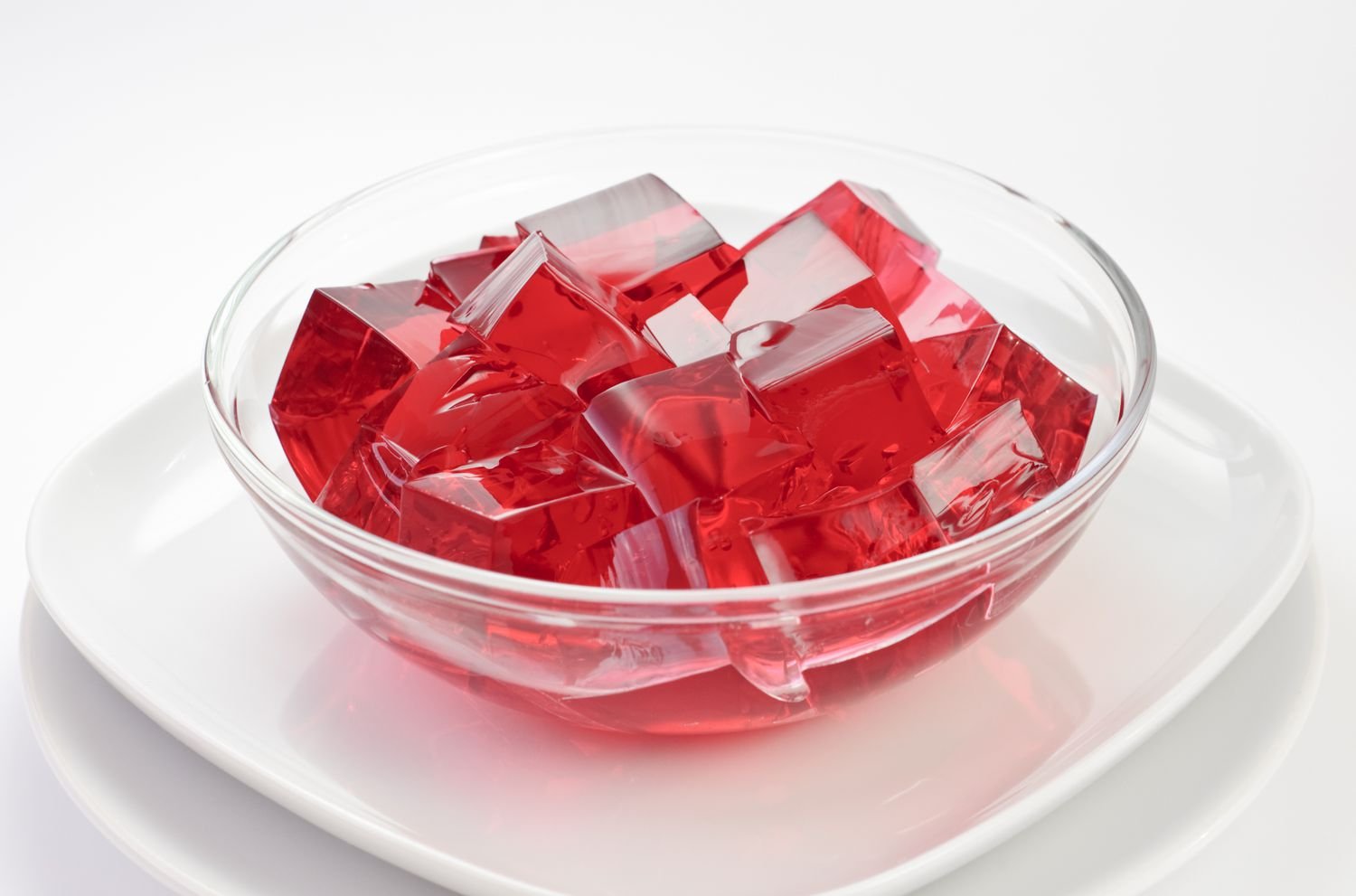
For a simple version, use about 1 tablespoon of unflavored gelatin with approximately ½ cup of warm liquid. Stir until completely dissolved, then add roughly ½ cup of cool liquid and allow it to chill if you prefer a set texture.
Water is enough. Unsweetened tea can also work.
There is no strong evidence that apple cider vinegar makes the routine more effective, and adding acidic ingredients is not necessary to activate gelatin.
If you want a firmer texture, prepare it as a small gelatin portion rather than drinking it immediately. That may also slow down consumption, which is a reasonable behavioral advantage.
The Pink Gelatin Weight Loss Recipe provides a different look at the recipe and preparation method.
Plain Gelatin Is Not the Same as a Complete Protein Strategy
There is another detail that viral posts tend to skip.
Gelatin is a protein, but it is not nutritionally equivalent to a complete dietary protein such as eggs, dairy proteins, fish, meat, or many appropriately combined plant proteins. It is relatively poor in some essential amino acids, including tryptophan.
So adding gelatin to a diet can contribute protein, but it should not become an excuse to replace balanced meals with gelatin drinks or cubes.
And the popular claim that its glycine and proline content “repairs the gut” or reduces facial puffiness caused by cortisol is much less established than social media makes it sound. Those claims should be treated cautiously rather than presented as settled medical facts.
What About the 15-to-30-Minute Timing?
This is probably the least established part of the routine.
There is a clear difference between demonstrating that a gelatinized food can alter gastric emptying and proving that consuming one tablespoon of gelatin exactly 15, 20, or 30 minutes before a meal reliably reduces calorie intake.
Those are different questions.
There is not enough evidence to claim that 20 minutes is a medically optimal window. If someone finds that having a small gelatin serving before lunch makes the meal easier to manage, the timing can be viewed as a personal appetite-management strategy rather than a scientifically established prescription.
What the Gelatin Trick Can Realistically Do
The most realistic benefit is behavioral.
A small, low-calorie gelatin serving may give some people a little more structure before a meal. It can also be useful when someone tends to arrive at meals extremely hungry and then eats quickly.
But it is not a fat burner. It does not chemically “melt” abdominal fat. And it should not be presented as a cheap substitute for GLP-1 medications.
When the Routine May Not Be a Good Idea
Anyone with a known gelatin allergy should avoid it. People who experience digestive symptoms from particular sweeteners or flavored gelatin products should also check the ingredient list rather than assuming every gelatin product is interchangeable.
For people who have undergone bariatric surgery, the question is more specific. Postoperative diet stages, fluid intake, protein requirements, and food tolerance vary, so a new routine should be cleared with the bariatric team rather than copied from social media.
Commercial dessert gelatin can also be very different from plain unflavored gelatin. Added sugar, sweeteners, and other ingredients can change the nutritional profile considerably.
FAQs About the Gelatin Trick
1. Does the gelatin trick actually burn fat?
No. There is no good evidence that gelatin directly burns body fat. Any potential weight-management benefit would more plausibly come from helping someone manage food intake.
2. Is gelatin before a meal better than eating it after a meal?
There is not enough evidence to establish one universally superior timing. The viral 15-to-30-minute rule should not be treated as a medical requirement.
3. Can collagen powder be substituted for gelatin?
Not automatically. Collagen peptides and gelatin have different physical properties. Gelatin forms a gel when hydrated, while many collagen powders dissolve without producing the same texture.
4. Is the bariatric Jello routine recommended after weight-loss surgery?
Not as a universal protocol. Bariatric patients receive individualized dietary instructions, particularly during the postoperative recovery period.
5. Can gelatin replace a protein-rich meal?
No. Gelatin should not be used as a substitute for a nutritionally balanced meal containing adequate protein and other essential nutrients.
6. Does glycine in gelatin increase GLP-1?
The evidence does not support a simple claim that the glycine in a pre-meal gelatin serving reliably produces a clinically meaningful GLP-1 increase. Appetite regulation is considerably more complicated than one amino acid.
The Bottom Line
The appeal of the pre-meal gelatin routine is easy to understand. It is inexpensive, simple, and gives people something concrete to try when controlling hunger feels difficult.
There is some science behind the idea that gelatinized foods can affect gastric emptying and that protein can influence appetite. But the leap from those observations to “gelatin is a natural GLP-1 alternative” is not supported.
Perhaps that is the more useful way to look at the trend. Gelatin may have a small role in an appetite-management routine for some people. It does not need to be a miracle to be useful, and it certainly does not need a miracle story attached to it.