






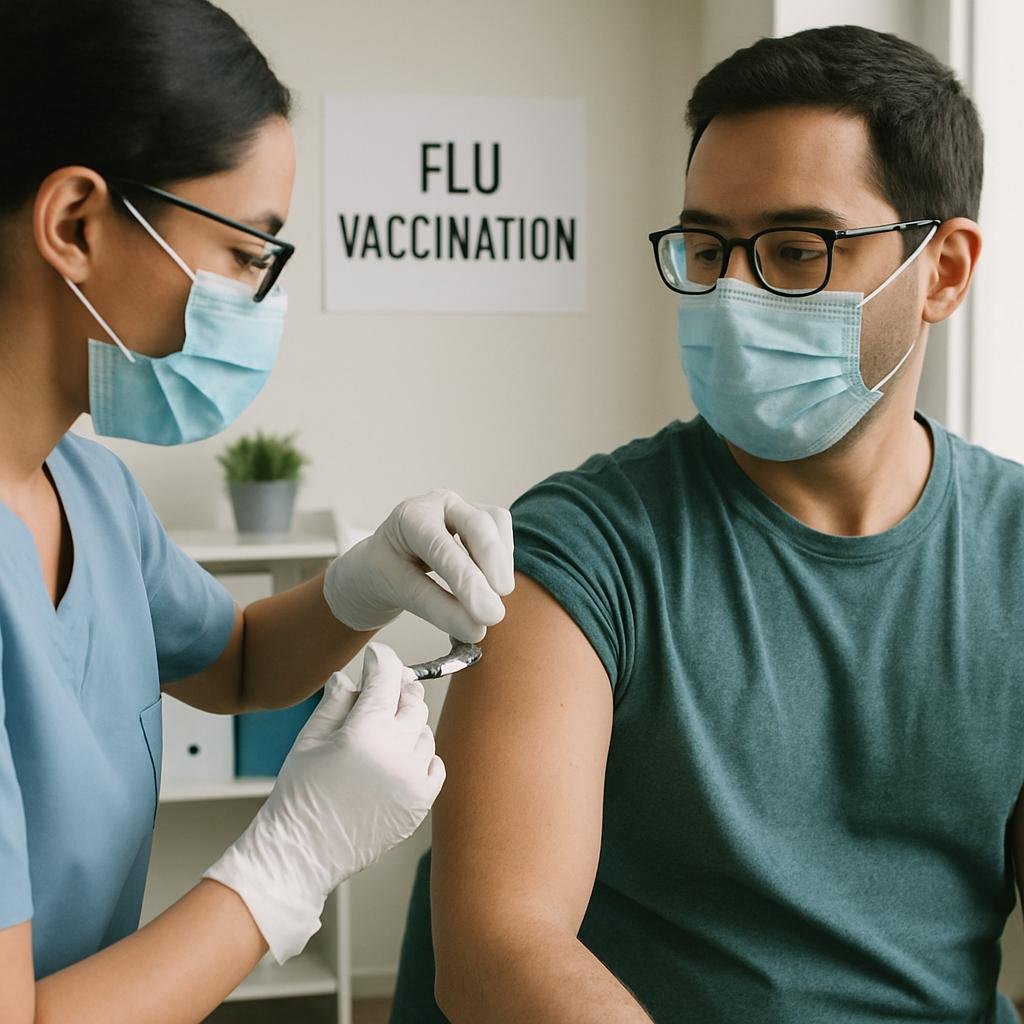
Woke up with a fever, a dry cough and aching muscles? Those flu symptoms are turning up earlier than usual this year, and a changed version of H1N1 may be the reason.
A Wall Street Journal report on October 31 drew attention to the unusually early start of the 2026-27 flu season. Scientists are also watching one specific mutation in the virus.
So what is going on? And does it change what you should do this week? Let’s find out.
Why is flu season starting so early?
Flu surveillance in the U.S. normally runs from about week 40 of the year to week 20 of the next. This year, activity is rising ahead of schedule. In an October 23 update, the CDC said early-season activity is higher than usual for this time of year.
Here are the numbers. According to Northeastern Global News, CDC data for the week ending September 26 showed about 3.4% of respiratory samples testing positive for influenza. That is roughly eight times the level at the same point last year.
Activity rose first on the West Coast, which is not the usual pattern. Japan also had an early season, with school closures and a sharp rise in clinic visits.
What explains it? Samuel Scarpino, a public health professor at Northeastern University, said an H1N1 variant appears to be behind the surge and the early start. He also noted the season is still inside its normal window, just earlier than most.
What is H1N1, and what is the G155E mutation?
H1N1 is a subtype of influenza A. It caused the 2009 pandemic, and it now circulates as a regular seasonal virus.
The G155E mutation is a one-letter change in the gene for a protein on the virus surface. Your antibodies recognize a virus by the shape of that surface. A small change can make recognition weaker.
Researchers first picked up this change in Japan in May 2026, and it was identified in Seattle in September. Most H1N1 viruses now circulating in the U.S. carry it.
Why worry about younger people? Scarpino explained that teenagers and young adults had their first flu exposure to the 2009 H1N1 strain. This mutation changes a spot their immune systems tend to focus on. Early blood tests suggest their antibodies may recognize it less well, though this research is still preliminary.
Can a mutation weaken the flu vaccine 2026?
Possibly a little. Canceled? No.
All three virus components in this year’s shots were updated, including the H1N1 part. But the mutation appeared after the vaccines were designed, so G155E is not in them. Early lab testing suggests the vaccine should still recognize the virus. Researchers interviewed by Reuters said two of the three components look well matched, though questions remain about the H1N1 part.
Real-world effectiveness numbers for the flu vaccine 2026 will not be available until midwinter. Last season, the vaccine was about 30% to 40% effective at preventing doctor visits and hospitalizations, which was lower than usual. Even so, Scarpino noted that at about 30% effectiveness in 2022-23, the CDC estimated flu vaccination prevented more than 70,000 hospitalizations and about 3,700 deaths.
So a modest match can still prevent a lot of severe illness.
What are the most common flu symptoms?
The CDC lists fever, cough, sore throat, a runny or stuffy nose, body aches, headache, chills and fatigue. Some people also have vomiting and diarrhea, and it is possible to have flu with no fever at all.
Many people feel the worst of it in the first few days. Extreme fatigue and a pounding headache are common complaints. Nausea can appear too, though vomiting is not the main sign.
How do you tell a cold from the flu? The difference between a cold and flu symptoms is mostly speed and strength. A cold builds slowly, with a runny nose and mild fever at most. Flu usually arrives suddenly with fever, aches and deep tiredness.
Are H1N1 symptoms different from other flu?
No. In everyday life, H1N1 symptoms match other influenza A infections. The subtype is identified by a lab test, not by how you feel, and most people never need to know it.
What matters more is how sick you are and whether you have risk factors. A doctor can test for influenza and decide whether treatment makes sense.
Who is at higher risk of complications?
The CDC lists young children, pregnant women, adults 65 and older, and people with chronic conditions such as asthma, diabetes, heart disease or lung disease. For these groups, flu can lead to pneumonia, worsening of an existing condition, or a hospital stay.
Babies under 6 months are also at higher risk but are too young for the vaccine. That is why the people around them should be vaccinated.
What about this mutated strain? Experts say it is too early to tell whether H1N1 symptoms will be more severe this season. Weaker immune recognition in some younger people does not automatically mean worse illness. It means watching the data.
What do CDC recommendations say about the flu vaccine 2026?
The Centers for Disease Control and Prevention recommends a yearly flu vaccine for everyone 6 months and older, ideally by the end of October. It also says people should keep getting vaccinated as long as flu viruses are a threat in their community.
Vaccination matters most for higher-risk people and those who care for them. The CDC also says vaccination can reduce the severity of illness in people who still get sick.
Some practical points from current CDC guidance:
- Adults 65 and older are advised to get a high-dose, adjuvanted or recombinant vaccine when available.
- Children 6 months to 8 years may need one or two doses, depending on their vaccine history.
- A new mRNA flu vaccine is available for adults 50 and older.
What should you do if you get sick?
Stay home. The CDC advises waiting until your symptoms are improving overall and you have had no fever for at least 24 hours without fever-reducing medicine.
Ask about antivirals. These are prescription medicines that can make flu milder and shorter. They work best when started within two days of getting sick, so call early if you are at higher risk.
Get urgent medical care for trouble breathing, chest pain, confusion, severe weakness, signs of dehydration, seizures, or a fever that returns after you seemed to improve. In babies, watch for fast breathing, bluish lips, poor feeding and being hard to wake.
FAQs
Is it too late to get the flu vaccine 2026 in November?
No. The CDC says to keep vaccinating while flu viruses are circulating. Protection takes about two weeks to build, so sooner is better.
Can I have H1N1 symptoms without a fever?
Yes. The CDC says people can have influenza and respiratory symptoms without a fever. A test is the only way to confirm.
Can I still get the flu after vaccination?
Yes. The vaccine does not block every infection. It does lower the chance of severe illness, and the CDC says it can make the illness milder in people who still get sick.
Does this mutation mean a severe season is coming?
Nobody knows yet. Scientists also do not know whether H3N2 or influenza B will rise later in the season, which is why surveillance continues.
Can people with an egg allergy get a flu vaccine?
Yes. Current guidance says people with an egg allergy may receive any age-appropriate flu vaccine. Talk to your doctor if you have had a severe reaction before.
How long can I spread the flu?
People can spread flu starting about a day before symptoms appear. Keep your distance from others and follow the CDC’s 24-hour fever-free rule before going back to work or school.
So where does this leave you?
Knowing the flu symptoms takes one minute, and it helps you act fast. If H1N1 symptoms appear, rest, stay home and ask about antivirals if you are at higher risk.
The mutation is a real unknown, but it is not a reason to skip vaccination. The flu vaccine 2026 may not match perfectly, yet early evidence says it should still protect many people, especially against severe illness.