






For years, the problem with health tracking was not the lack of data. It was where that data lived: on your wrist, glowing at you. Another notification. Another score. Another reason to look at a screen before breakfast.
Now the industry is moving in the opposite direction.
A growing number of people want continuous health data without wearing a miniature smartphone all day. They want to sleep with a device that does not light up at 2 a.m., train without staring at a wrist, and track long-term physiological changes without thinking about the tracker every few minutes. That is where smart rings and screenless bands have found their opening.
The interesting part is that these devices are not simply smaller smartwatches. Their purpose is different.
The real appeal of invisible tracking is not invisibility. It is less interference.
A smart ring for sleep works best when you almost forget it is there. That sounds trivial, but it changes the entire user experience.
A screenless wearable can collect data continuously while the information stays in the background until the user actually wants to see it. Modern rings and bands typically combine optical sensors, accelerometers, temperature sensors, and other components to estimate heart rate, heart-rate variability, movement, sleep patterns, and recovery.
This matters particularly at night. A smartwatch can be useful during the day, yet many people find it bulky while sleeping. A ring does not have the same visual or physical presence. The goal is not constant interaction. The goal is continuous measurement with delayed interpretation.
Recent smart ring options have also made Oura Ring alternatives more relevant than they were only a few years ago. RingConn, Samsung, and other manufacturers now compete on comfort, battery life, software, subscription costs, and ecosystem integration rather than simply copying the basic idea of a health ring.
A smart ring can estimate sleep. It cannot look inside your brain.
This is where marketing and evidence need to be separated.
A smart ring for sleep does not directly observe sleep stages in the same way a laboratory polysomnography test can. Instead, it uses physiological signals, including movement and cardiovascular data, to estimate when a person is awake, asleep, or moving between different stages.
That distinction is important.
A 2024 validation study comparing Oura Ring Gen3 sleep staging with multi-night ambulatory polysomnography found promising results, but validation does not mean that every consumer ring can diagnose a sleep disorder or produce laboratory-grade results in every individual. Device model, software version, and algorithm all matter.
The American Academy of Sleep Medicine has also warned that consumer sleep technologies should not replace clinical evaluation for suspected sleep disorders. A sleep score can be useful for spotting a pattern, but it cannot rule out conditions such as sleep apnea, insomnia or narcolepsy.
The most useful question, then, may not be “Did I get 42 minutes of deep sleep?” A single-night estimate can fluctuate. It is often more useful to ask whether your sleep duration, bedtime consistency, overnight heart rate, or recovery indicators have changed over several weeks.
That is a much stronger use of a smart ring for sleep data.
Oura is no longer the only answer, and that changes the buying question
Search interest in Oura Ring alternatives reflects a real consumer problem: many buyers now want screenless tracking without necessarily accepting the same subscription model, price, or phone ecosystem.
The choice is becoming more specific.
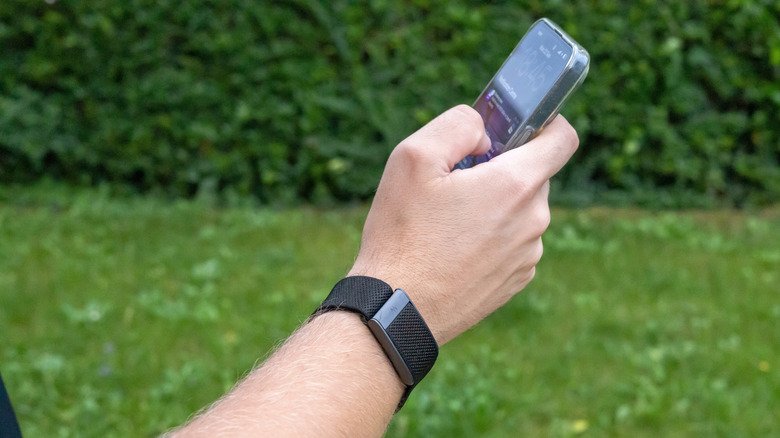
Someone who wants detailed sleep and recovery analysis may prioritize software. Someone trying to avoid a recurring subscription may look for Oura Ring alternatives such as RingConn. A person already invested in Samsung’s ecosystem may find a Galaxy Ring more practical. WHOOP, meanwhile, approaches the screenless idea differently through a strap designed around continuous strain and recovery data.
This is the important shift: consumers are no longer just asking which ring is “best.” They are asking which device collects the type of data they actually care about.
That is why Oura Ring alternatives have become a genuine search category rather than a simple list of cheaper products.
The phrase “metabolic health tracker” needs more skepticism than most ads suggest
The rise of the metabolic health tracker is one of the more interesting developments in wearable health technology, but it is also an area where consumers should read the fine print.
A smart ring can track signals associated with recovery and metabolic status, such as resting heart rate, HRV, activity, temperature trends, and sleep. That can help identify patterns. It is not the same thing as continuously measuring blood glucose, insulin sensitivity, or every aspect of metabolism.
A true metabolic health tracker may combine wearable data with other information, including food logging, continuous glucose monitoring, laboratory testing, or broader lifestyle data. Those inputs answer different questions.
The expert layer here is simple: a wearable may reveal a trend without explaining its cause.
A higher resting heart rate, for example, could be associated with illness, poor sleep, alcohol, training load, or numerous other factors. The device can detect the change. It usually cannot diagnose why it happened.
A 2025 systematic review covering 107 studies found strong evidence for several smart-ring measurement applications, including heart rate, heart-rate variability and sleep detection, while also noting that clinical utility beyond established uses remains uneven. That is encouraging evidence, but it is not a licence to treat every wellness score as a diagnosis. 2025 systematic review of smart rings in clinical medicine on PubMed
For that reason, metabolic health tracker claims should be judged by what the device measures directly and what the software merely infers.
Hormonal-cycle tracking is useful, but a forecast is not a diagnosis
This is another area where invisible wearables can be genuinely useful. Overnight temperature trends and cycle history may help estimate menstrual-cycle phases and detect changes over time.
However, temperature-based cycle estimates are affected by illness, sleep disruption, medication, alcohol, and inconsistent measurement conditions. They may support fertility awareness, but they should not be presented as a universal substitute for clinical testing or medical advice.
The same principle applies throughout wearable health technology: continuous data can make patterns easier to see, but more data does not automatically mean more certainty.
What comes after the watch?
Perhaps the most important development is not that rings are replacing watches. Watches will remain useful for maps, calls, workouts, and real-time information.
Screenless wearables are simply being optimized for a different job.
The watch is interactive. The ring is observational.
That distinction could shape the next phase of health technology. People increasingly want the device to notice what is happening without demanding attention in return. Better sensors will matter, certainly. But so will better interpretation, stronger clinical validation and a clearer separation between a useful wellness signal and a medical conclusion.
The best invisible tracker, arguably, may be the one that quietly gives you a reason to understand your body better, then knows when it has reached the limit of what a consumer device can tell you.
FAQs
Can a smart ring diagnose sleep apnea?
No. A consumer smart ring may detect patterns worth discussing with a doctor, but it is not a replacement for a clinical sleep evaluation or an approved diagnostic test.
Are smart rings more accurate than smartwatches?
Not universally. Accuracy depends on the sensor, metric, fit, algorithm, and activity. A ring’s location on the finger can be advantageous for some optical measurements, but that does not make every metric automatically more accurate.
Can a smart ring measure blood sugar?
Most mainstream smart rings do not directly measure blood glucose. Be cautious with claims that imply glucose readings without a dedicated glucose-monitoring technology.
Why are screenless wearables popular for sleep?
They can be lighter, less distracting, and easier to wear continuously than a watch. The absence of a display also reduces the temptation to check notifications or health scores in bed.
Are Oura Ring alternatives worth considering?
Yes, particularly if you want to avoid a subscription, prefer another phone ecosystem, or value different features. However, compare current availability, long-term support, and the specific health metrics that matter to you.
What is the most useful metric to track over time?
There is no single answer. For many people, trends in sleep duration, resting heart rate, HRV, and activity are more useful than obsessing over a single nightly score.