



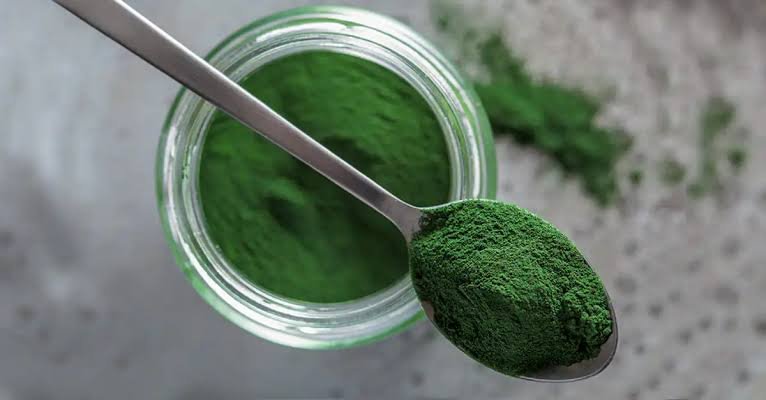
For years, the advice to vegans has been remarkably consistent: do not count on spirulina for vitamin B12. That warning existed for a good reason. The green powder might look like a nutritional powerhouse on the label, but much of the B12 traditionally detected in spirulina is pseudovitamin B12, a form humans cannot reliably use.
Now that assumption may be changing.
Research released in the news cycle on August 30, 2026, highlighted a remarkable finding: scientists have grown Spirulina containing biologically active vitamin B12 at levels comparable to beef. The discovery has immediately raised a bigger question. Could active B12 spirulina finally become one of the natural vegan B12 sources people have been searching for?
The answer is exciting. It is also more complicated than the headlines suggest.
The Breakthrough Was Not About Ordinary Spirulina
The research did not discover that every spoonful of conventional spirulina suddenly contains usable B12. Instead, scientists used carefully controlled light conditions to cultivate what they call photosynthetically controlled Spirulina.
That distinction matters.
Conventional spirulina products are usually dominated by pseudovitamin B12. A 2022 analysis of algae-based supplements found that pseudovitamin B12 was the prevailing form in Spirulina products, which is precisely why conventional spirulina B12 absorption has been such a longstanding concern. The 2022 Journal of Food Composition and Analysis study
The new cultivation system appears to change the biology of the biomass itself. According to the researchers, the Spirulina produced 1.64 micrograms of biologically active B12 per 100 grams, compared with approximately 0.7 to 1.5 micrograms per 100 grams of beef.
More strikingly, the research reported that more than 98% of the measured B12 was in the active form.
That is why active B12 spirulina is generating so much interest. The important part is not simply the total B12 number. It is the form of B12 being measured.
Why Spirulina B12 Absorption Has Been the Problem All Along
This is where ordinary supplement labels can become misleading.
Vitamin B12 is not just one interchangeable chemical blob. Human biology depends on forms that can participate in normal metabolic processes. Pseudovitamin B12 resembles true B12 closely enough to complicate laboratory measurements, but similarity is not the same thing as nutritional usefulness.
Imagine finding a key that looks almost identical to the one for your front door, except it does not turn the lock. Conventional spirulina has often been the nutritional equivalent of that frustrating near-match.
So when people ask about spirulina B12 absorption, the first question should be: Which spirulina, and which form of B12?
For ordinary commercial spirulina, the answer remains unchanged. It should not currently be treated as a reliable primary source of vitamin B12.
The new photosynthetically controlled material is different. But there is an equally important caveat: the research demonstrates biologically active B12 in the cultivated biomass. That is not yet the same as large human clinical trials proving how effectively people absorb it, retain it, and use it to prevent or correct deficiency.
The Detail Most Headlines Are Missing
The concentration of active B12 in spirulina sounds impressive, but concentration and practical serving size are two separate issues.
The study’s reported figure is 1.64 micrograms per 100 grams. Most people do not eat 100 grams of spirulina powder or biomass in a day. A typical spirulina supplement serving can be dramatically smaller.
So even if the B12 remains fully active, a commercially useful product would need an appropriate serving format, concentration, or food formulation to deliver meaningful amounts.
That is one reason the discovery may ultimately be more important for fortified plant-based foods, specialized nutrition products, or future B12 ingredients than for simply replacing your morning spirulina tablet.
Still, for people trying to reduce reliance on animal foods, it could expand the future list of natural vegan B12 sources in a genuinely meaningful way.
For broader plant-based nutrition, DailyHealthPro has also explored moving away from meat and building a balanced plant-based kitchen.
What Happens When Vitamin B12 Is Actually Low?
The excitement around this research should not distract from the medical reality of B12 deficiency.
Low B12 can develop because of inadequate intake, but diet is not the only cause. Pernicious anemia, reduced intrinsic factor, stomach or intestinal surgery, digestive diseases, and some medications can interfere with absorption.
Common symptoms can include fatigue, weakness, pale skin, palpitations, and a sore tongue. Neurological symptoms may include numbness or tingling in the hands and feet, balance problems, memory difficulties, and other changes. These symptoms can occur even without obvious anemia.
The National Institutes of Health explains that vitamin B12 status is commonly assessed with blood testing, while methylmalonic acid can help confirm deficiency in certain borderline cases.
In other words, do not try to diagnose B12 deficiency from tiredness alone.
If neurological symptoms develop, medical assessment matters. Vitamin B12 deficiency is also one possible nutritional issue discussed in DailyHealthPro’s guide to hand tremors and their potential causes.
So, Is Active B12 Spirulina Ready to Replace Supplements?
Not yet.
The breakthrough deserves attention because it challenges one of the biggest nutritional limitations of Spirulina. But people currently following a vegan diet should not stop using established B12 supplements or fortified foods because of an experimental cultivation breakthrough.
Until a commercially available product is independently verified for active B12 content and human spirulina B12 absorption, the reliable options remain fortified foods and appropriately formulated supplements.
That does not make the research less important. Actually, the opposite may be true. Natural vegan B12 sources have been limited by a basic biological problem for decades, and this work suggests that the problem might be engineered around without relying on genetic modification.
Perhaps the real story is not that Spirulina has suddenly become a miracle food. It is that scientists may finally have found a way to make one of its most discussed nutritional claims real.
FAQs
Can I get enough B12 from regular spirulina?
No. Conventional spirulina is not considered a reliable source because much of its B12-like content is pseudovitamin B12 rather than usable cobalamin.
Is the new active B12 spirulina genetically modified?
The reported cultivation method uses controlled light conditions to influence Spirulina’s natural metabolism. The breakthrough was reported as occurring without genetic modification.
Does active B12 spirulina work better than synthetic B12 supplements?
There is not yet enough human clinical evidence to make that comparison. Active B12 in the biomass does not automatically prove superior absorption or clinical effectiveness.
Could active B12 spirulina be added to vegan meat or milk?
Potentially. The researchers have identified the biomass as a possible ingredient for sustainable, nutrient-enhanced foods, including plant-based alternatives.
Who should not wait for this breakthrough to reach the market?
Anyone diagnosed with B12 deficiency, people with neurological symptoms, and people with absorption disorders should follow medical advice and use proven treatment approaches rather than relying on experimental or unverified Spirulina products.
Could this reduce the need for synthetic B12 in vegan foods?
Possibly in the future, but that depends on commercial scaling, serving size, cost, product stability, independent testing, and human bioavailability data.
The August 30, 2026 attention around active B12 spirulina is justified, but this is still a story about potential becoming practical, not potential already becoming a supplement bottle. The science has moved one major step forward. Whether the product world and human clinical research can close the remaining gap is the part worth watching next.